Chancy

Share my page

Support my challenge to care for young Western Australians

Every school day across Western Australia, 250,000 students walk into a school where someone knows their name. In 2025, YouthCARE chaplains and volunteers showed up in 600 school communities and 38 sporting clubs across the state, from the Kimberley to the Great Southern.

They sat with students navigating hard things, served nearly 700,000 meals through Breakfast Club, delivered 30,760 wellbeing sessions, and supported more than 10,000 athletes and their families on the sidelines.

260,000 people. One consistent presence. Ridiculously good care.

Your support helps provide ridiculously good care to young Western Australians.

My Achievements

Fundraising page
Updated Profile Pic
Added a Blog Post

Received 5 Donations

Received 10 Donations

Received 15 Donations

Received 20 Donations

Reached Goal

Increased Target

My Updates
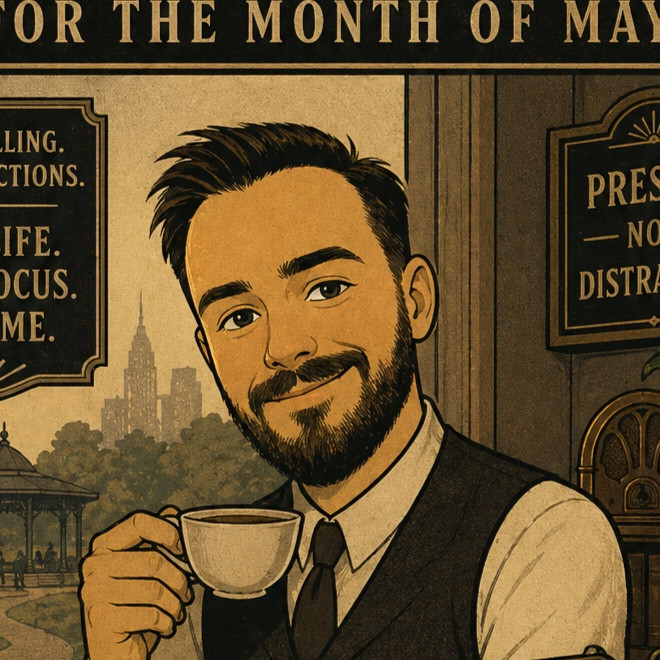
Bare Necessities

Wednesday 20th May
I was recently watching Disney’s The Jungle Book; the original version. In the film, one of the many songs sung by Baloo is The Bare Necessities. After the song, whilst floating down the river, he says this line:


“When you find out you can live without it and go along not thinking about it, I’ll tell you something true: the bare necessities of life will come to you.”


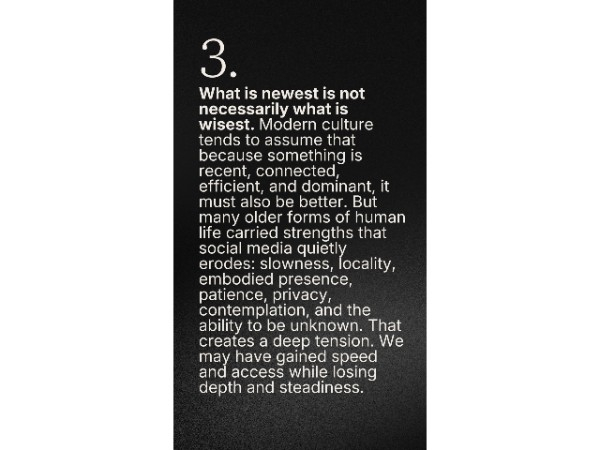
Well, I can safely say that, three weeks in, I can live without social media. In doing so, I seem to be delighting in the bare necessities a lot more.


One thing I’ve noticed is that my thinking feels… wider. What once felt automatic now seems to invite creativity. Decisions feel less reactive and more considered, almost as if my mind has a little more room to breathe.


At the same time, the impulse to reach for my phone and scroll is still very much there. It is fascinating how deeply habits can root themselves into the rhythms of everyday life. I suspect that urge will remain for a while yet, slowly weakening as old patterns are replaced with healthier ones.


What is becoming clearer to me is that removing social media did not instantly create peace. It created awareness. Awareness of silence. Awareness of boredom. Awareness of just how often I reached for stimulation without even thinking.


The slowness, the pause, and even the boredom seem to be igniting creativity.


Who are you without social media? Without the scroll?

Did you enjoy science at school?

Monday 11th May
Most of us can remember doing science experiments at school. You would begin with a question. What happens if we change this?
What happens if we add more of that?
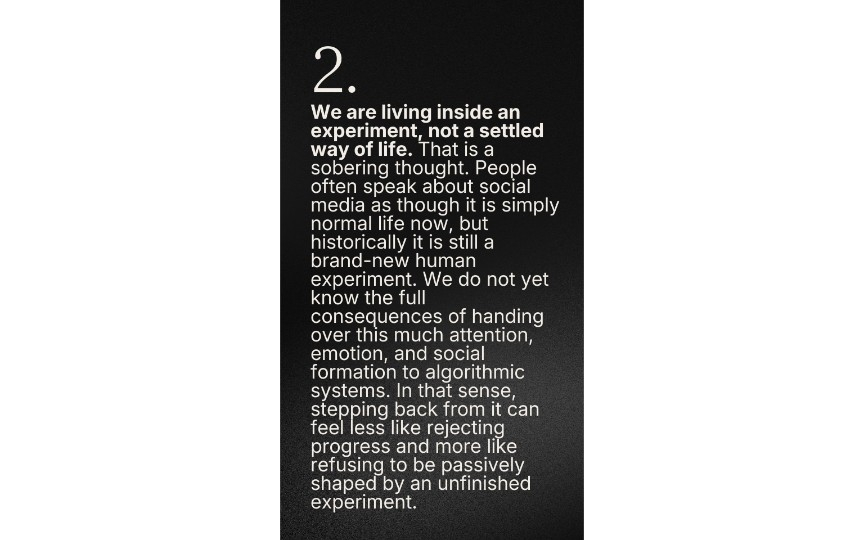
What happens if one thing is exposed to light whilst another is kept in darkness? Then came the method. The variables. The observations. The results. And, importantly, there was usually a control. The control was the part of the experiment that was not changed. It gave you something stable to compare against. Without a control, it became difficult to know what had actually caused the outcome. That simple classroom idea has stayed with me over the weekend. Because I wonder whether, in our modern digital life, we have quietly lost the control. Social media is often spoken about as though it is simply normal life now, as though this is just the way things are. We scroll. We post. We react. We compare. We consume. We are notified, nudged, prompted, and pulled. But historically speaking, this is still brand new. We are among the first generations to hand so much of our attention, emotion, social formation, imagination, outrage, loneliness, humour, identity, and sense of belonging over to algorithmic systems. That is a sobering thought. In a school experiment, you usually know what is being tested. You know what the question is. You know what is being changed. You know what is being measured. But in this experiment, many of us are not entirely sure what the question is. Is the question: How much attention can be captured?
How long can people be kept engaged?
How quickly can desire be stirred?
How effectively can outrage travel?
How subtly can comparison shape identity?
How deeply can a person be trained to reach for a device before they have even noticed they are lonely, tired, bored, anxious, or restless? This is where the idea of freedom becomes complicated. We often think of social media as liberty. We can connect with anyone. Say anything. Watch anything. Share anything. Build anything. Access anything. And, of course, there is truth in that. There are genuine gifts in digital connection. But freedom is not only the ability to choose from endless options. Sometimes, what looks like freedom can become a very sophisticated form of control. If my attention is constantly being directed, if my emotions are repeatedly being provoked, if my desires are being shaped by systems designed to keep me engaged, then I have to ask: am I truly free, or am I simply participating in an experiment whose controls sit somewhere outside of me? This is not about rejecting technology. It is not about pretending the past was perfect. It is not about moral panic. For me, stepping back from social media is becoming more about recovering the control in the experiment. It has been about creating enough distance to observe what is actually happening. What do I reach for when I am tired?
What do I crave when I am quiet?
What am I trying to avoid when I pick up my phone?
What happens within me when I am not constantly available to be stimulated?
What begins to return when the noise is lowered? In a school science experiment, observation matters. You do not rush to conclusions before you have watched carefully. That is what these first seven days have felt like. An observation period. And what I am noticing is that the phone is not just a tool I use. In some ways, it has become a tiny glowing doorway away from whatever is immediately in front of me. That realization is uncomfortable, but also strangely freeing. Because once you can observe something, you are no longer completely inside it. Perhaps one of the most important freedoms we can recover is not the freedom to consume more, scroll more, react more, or share more… …but the freedom to finally notice what is shaping us in the first place.

Psychologically Powerful

Thursday 7th May
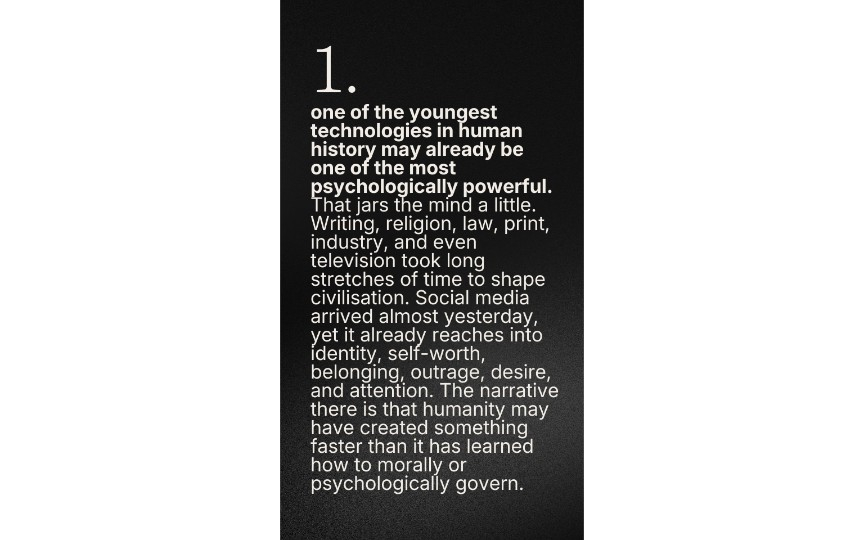
The evening of the first of May was the time I had set aside to delete my profiles and accounts. Most were relatively easy to remove, while others took a little longer. Over the last few days, I have noticed a few things, and I hope you do not mind me sharing them here. I have become aware of the impulse to pick up my phone. I have noticed how often others are scrolling around me, and I have become much more conscious of the presence of screens in everyday life. During a quiet moment of reflection, I sat with that impulse to reach for my phone. I slowed down and tried to listen to what my body and mind were asking for. What was this intention? What was this desire or need? What was sitting beneath it? Was I being driven by a task, or by the need to reply to a message or an email? Or was something deeper drawing my attention? I found myself asking whether what I wanted to look at was truly important. If it was important, how important was it? Had it always mattered, or was it only important in that passing moment? I also wondered whether I would be okay in the moments that followed if I chose not to pick up my phone and engage with it. That pause has been helpful. I have found myself returning to this kind of reflection more often, I invite you to do the same.

No social media for me. Real impact for others.

Monday 27th Apr
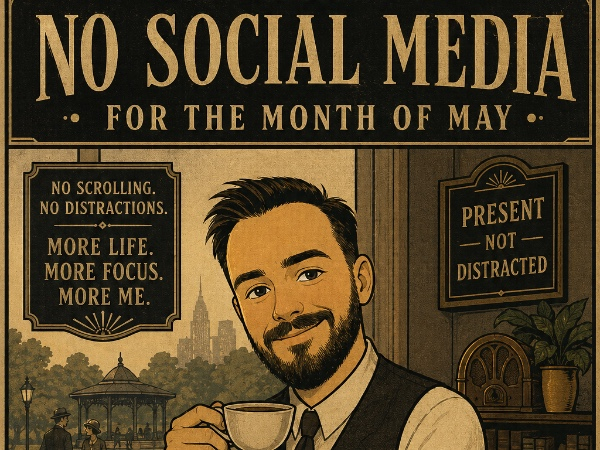
This May, I’m taking on a challenge: 30 days without social media. I’m stepping away from the scroll, the noise, and the constant pull for a full month, not just as a personal reset, but to shine a light on something that truly matters. Throughout 2025, 30,760 social and emotional support sessions were delivered by YouthCARE employees across school communities in Western Australia. Behind that number are real young people, real struggles, real conversations, and real care at the moments it was needed most. So my challenge is simple: 30 days off social media to highlight 30,760 moments of support. This is my way of choosing presence over distraction and purpose over habit. And here’s where you come in. I’d love you to sponsor me as I take on this challenge. Your support will help spotlight the importance of social and emotional care in school communities and back the kind of work that changes lives quietly, personally, and powerfully every single day. So, I’m asking: Will you sponsor me for going without social media for 30 days? Because while giving up social media for a month is a challenge, it’s nothing compared to the challenges many young people face, and they deserve support that is present, compassionate, and real. 30 days. No social media. One meaningful cause. Please sponsor me and help make a difference.

Thank you to my Sponsors

$28.43

Peter Rawstorne

$28.43

Lisa Howard

$25

Anonymous